In the first two parts we set out what a digital twin is and how it serves the technical department. The same file, though, works just as well for an entirely different department: sales. And there the value is not saved time, but the removal of a doubt that stops a client saying yes.
The problem with photographs
A prospective client looking at photographs knows they are seeing the best possible version of the space: the right angle, the right light, the lens that makes the room look larger. That awareness creates a reasonable reservation, and no additional photograph resolves it.
A navigable 3D walkthrough solves the problem at its root: the client is not looking at your choice of angle, they are moving through the space themselves. Whatever is there, is there. That transparency is not merely impressive — it is the argument.
Conference spaces and events
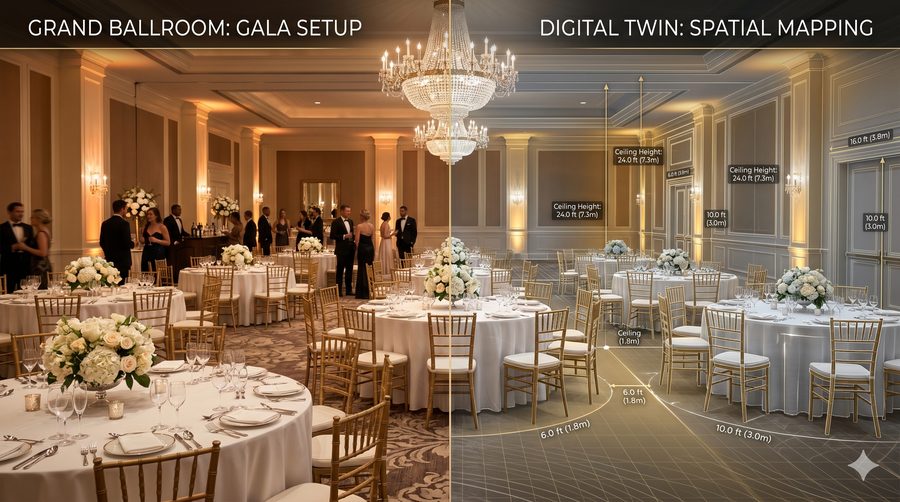
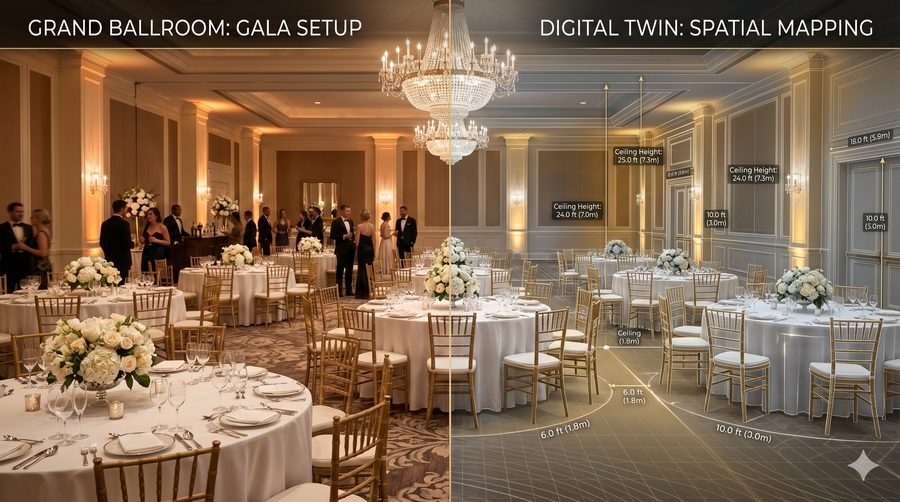
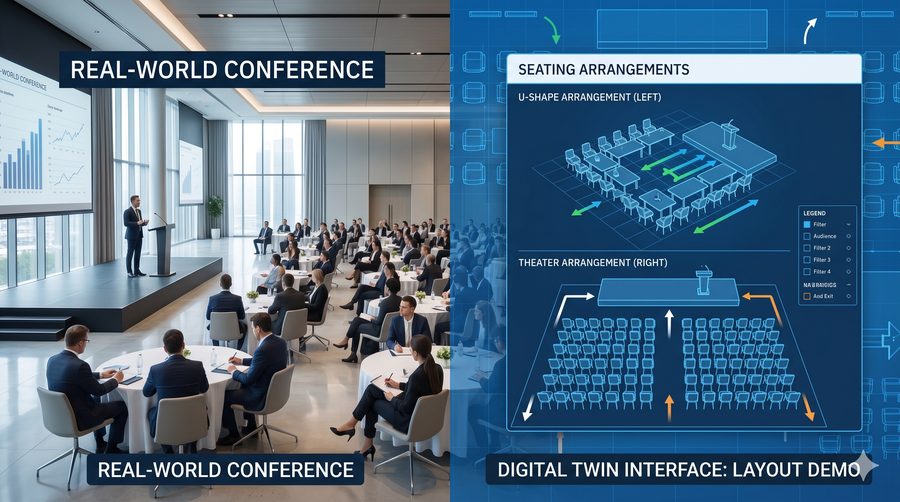
Here the walkthrough is not decorative, it is a working tool. An event planner needs measurements: how wide the corridor is, what the ceiling height is beneath the chandelier, how many stands fit along the foyer wall.
Inside the tour they can measure distances themselves. The doll house view gives them a sense of overall scale that no photograph conveys. In practice, a planner abroad can move to a proposal without a visit — and you enter the shortlist without a trip being required.
Direct bookings for premium accommodation
The higher the room rate, the greater the guest's need to be sure of what they are buying. For a villa or suite priced well above the next category, being able to walk it virtually works in favour of booking direct.
The tour embeds into your own website with ready-made code, on your own page — not on a third-party platform. The visit and the booking stay with you.
A tool for your partners
Tour operators and agents sell your hotel without having seen it. A tour link — public or protected, depending on what you want visible — lets them present it as if they were standing in it.
The same applies internally: a presentation to an investor, a board, a prospective franchisor. The space becomes something you can send.
Two things worth watching
First, the date. A tour is a record of the space on a given date. After a refurbishment or a change of furniture it needs recapturing — otherwise you are promising something that is no longer true.
Second, planning the capture. Scanning is done with the spaces dressed as you want a client to see them, and without guests or staff present who have not consented. An appointment in low season or before the season opens is the right moment.
The next part moves to the bigger picture: how a digital twin is the foundation for a refurbishment with no surprises and no budget overrun.